Anger is one of the most powerful emotions we carry, and letting go of anger is one of the hardest things we’re ever asked to do. Someone wrongs us. A situation feels unfair. And the fire starts burning, sometimes for hours, sometimes for years.
But the Buddha’s teaching on letting go of anger asks a simple, uncomfortable question: Who is the anger actually hurting?
The answer, almost always, is you.
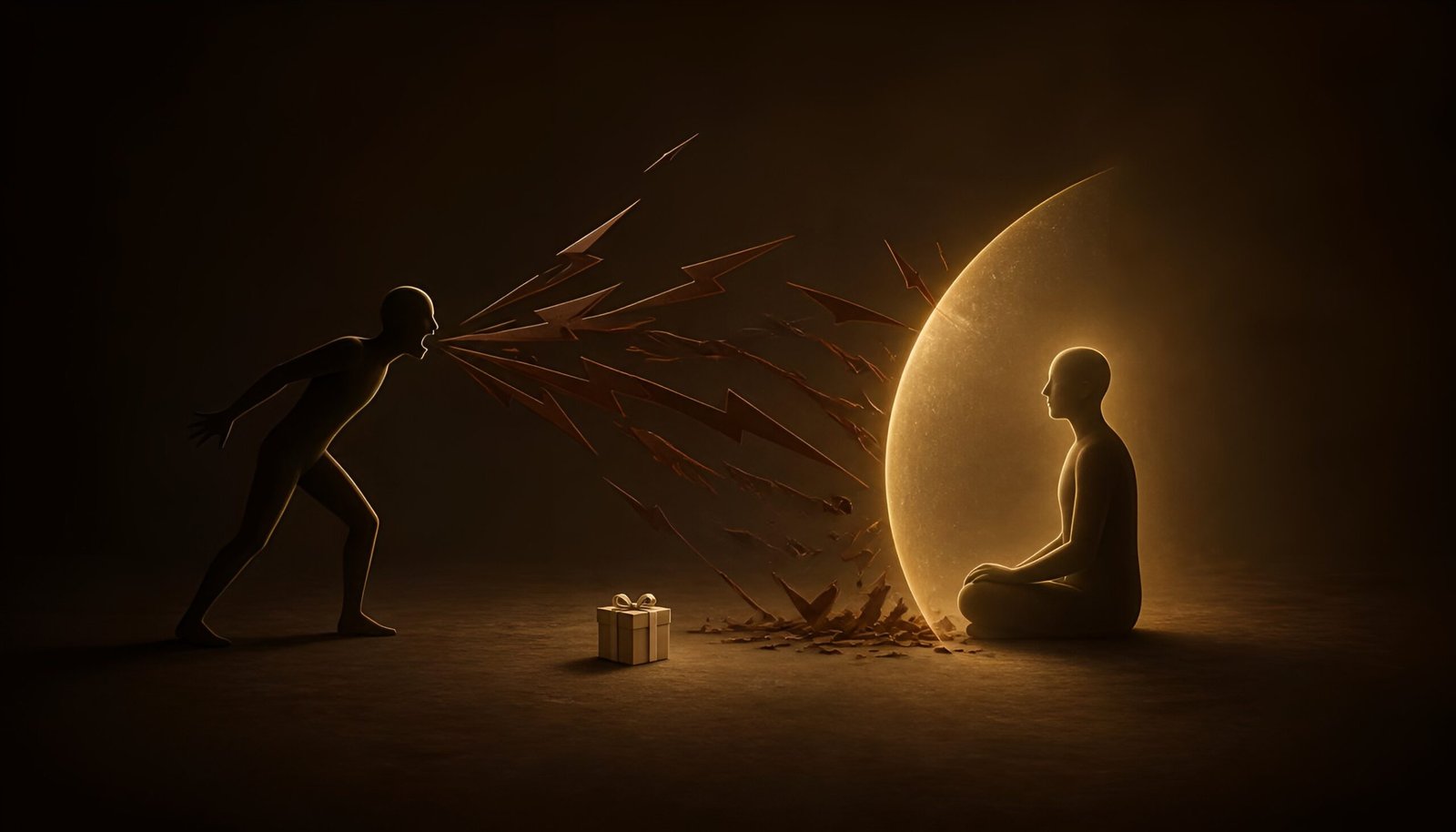
“Holding onto anger is like drinking poison and expecting the other person to die.”
– attributed to the Buddha
Why We Hold Onto Anger
Staying angry feels like doing something. It gives us a sense of control, as if the longer we hold on, the more seriously we are taking the situation.
But Buddhist teachings on anger reveal a hard truth: the person who wronged you has moved on. Meanwhile, you are still carrying the weight of that moment, in your body, in your thoughts, in your sleep.
Anger that lingers is no longer about what happened. It becomes a habit of the mind.
What Buddha Taught About Letting Go of Anger
In the Dhammapada, one of the oldest collections of the Buddha’s teachings, the mind is described as the forerunner of all actions. A mind consumed by anger creates more suffering, not justice, not resolution, not peace.
The Buddha taught that letting go of anger is not the same as accepting that what happened was okay. It is not weakness. It is not forgetting.
Letting go is the decision to stop allowing a past moment to control your present peace. It is, in the Buddha’s framework, one of the deepest acts of self-compassion available to us.
“You will not be punished for your anger. You will be punished by your anger.”
– attributed to the Buddha
A Simple Buddhist Practice for Releasing Anger
You don’t need a meditation retreat to begin. The next time anger rises, try this:
- Pause before reacting. Take one slow breath. The gap between stimulus and response is where your freedom lives.
- Locate it in your body. Anger lives somewhere physical, the chest, the jaw, the hands. Notice it without judgment.
- Ask one question. “If I release this right now, what do I feel?” Usually the answer is relief.
- Choose your next moment. Anger is a visitor, not a resident. You decide how long it stays.
Inner peace is not the absence of difficulty. It is the ability to remain steady when difficulty arrives, and to choose release over resentment, again and again.
Release what no longer serves you. 🙏
New here? Learn more about what this blog is about and why we share these teachings.
Tags: letting go of anger, buddha teachings on anger, how to find inner peace, buddhist mindfulness, release anger, peace of mind
🙏 Enjoyed this teaching?
Watch the short video version and subscribe for daily Buddhist wisdom. ▶ Visit The Peaceful Buddha on YouTube