Fear of change is one of the most universal human experiences, and something in your life may be triggering it right now – or about to. A job ending. A relationship shifting. A move, a decision, a chapter closing before the next one has made itself clear. And even if the change is something you chose, even if part of you knows it is right, there is still the fear. The ground beneath you, solid a moment ago, suddenly feels uncertain.
The Buddha considered this one of the most universal human experiences. And his teaching on it is both honest and unexpectedly freeing – because it begins not by reassuring you that everything will be fine, but by explaining exactly why the fear is there in the first place.
“Impermanent are all compounded things. They arise and cease – that is their nature. They come into being and pass away. Release from them is bliss supreme.”
– Buddha’s last teaching, chanted at Buddhist funerals, Pali Canon
Why Change Feels Threatening
The Buddha identified the source of the fear precisely. The mind is, as one modern commentary puts it, a prediction machine – it looks at what is currently working and attempts to lock it in place. A stable job, a familiar home, a relationship in its current form, an identity that feels settled. The mind says: this. Keep this. Do not let this change.
The problem is not that these things feel good. The problem is that the mind treats them as fixtures when they are, in the Buddha’s word, anicca – impermanent. Not permanently impermanent as a philosophical position, but actively, constantly, inevitably in motion. Everything that arises passes. Everything that comes together eventually separates. This is not pessimism. It is the description of how reality works.
Fear of change, in the Buddhist framework, is not a flaw of character. It is the natural result of trying to hold permanently what cannot be held permanently – of treating events as if they were objects, and clinging to them as if that clinging could make them stay.
Anicca – The First Mark of Existence
Impermanence – anicca in Pali – is the first of the three marks of existence in Buddhist teaching. The other two are dukkha (suffering or unsatisfactoriness) and anatta (the absence of a permanent self). These three are not separate ideas – they are interlocked. Because things are impermanent (anicca), clinging to them produces unsatisfactoriness (dukkha). And because there is no permanent self (anatta), the self doing the clinging is itself in constant change – which means the very thing trying to hold onto permanence is itself impermanent.
The verse above – “Impermanent are all compounded things” – was spoken as a kind of summary of the entire teaching, and has been chanted at Buddhist funerals in Theravada countries for centuries. Not to increase grief, but to remind the gathered community of something the death makes visible: this was always the nature of things. The change that feels shocking was always coming. The peace that is possible comes from understanding this – not after the fact, but before, as preparation, as orientation, as a way of meeting life as it is.
What Impermanence Offers the Fear of Change
Most people hear “everything is impermanent” as bad news. The Buddha taught it as liberation.
If everything passes – including the painful things – then no difficulty is permanent. The change you are afraid of will itself change. The uncertainty that feels unbearable right now will resolve, one way or another, into a new ground to stand on. The chapter that is ending was always going to end. And the chapter that comes next was always going to come.
Impermanence cuts both ways, and this is the point. The same law that takes away what you love also moves suffering through and out. The same principle that makes security feel fragile also makes difficulty temporary. Accepting anicca is not resignation. It is the recognition that fighting the nature of reality is what produces suffering – not the change itself.
“In the seen, there will be only the seen. In the heard, only the heard. In the sensed, only the sensed. In the cognized, only the cognized.”
– Buddha, Bahiya Sutta (Udana 1.10, Pali Canon)
The Cherry Blossom – Buddhism’s Image of Change
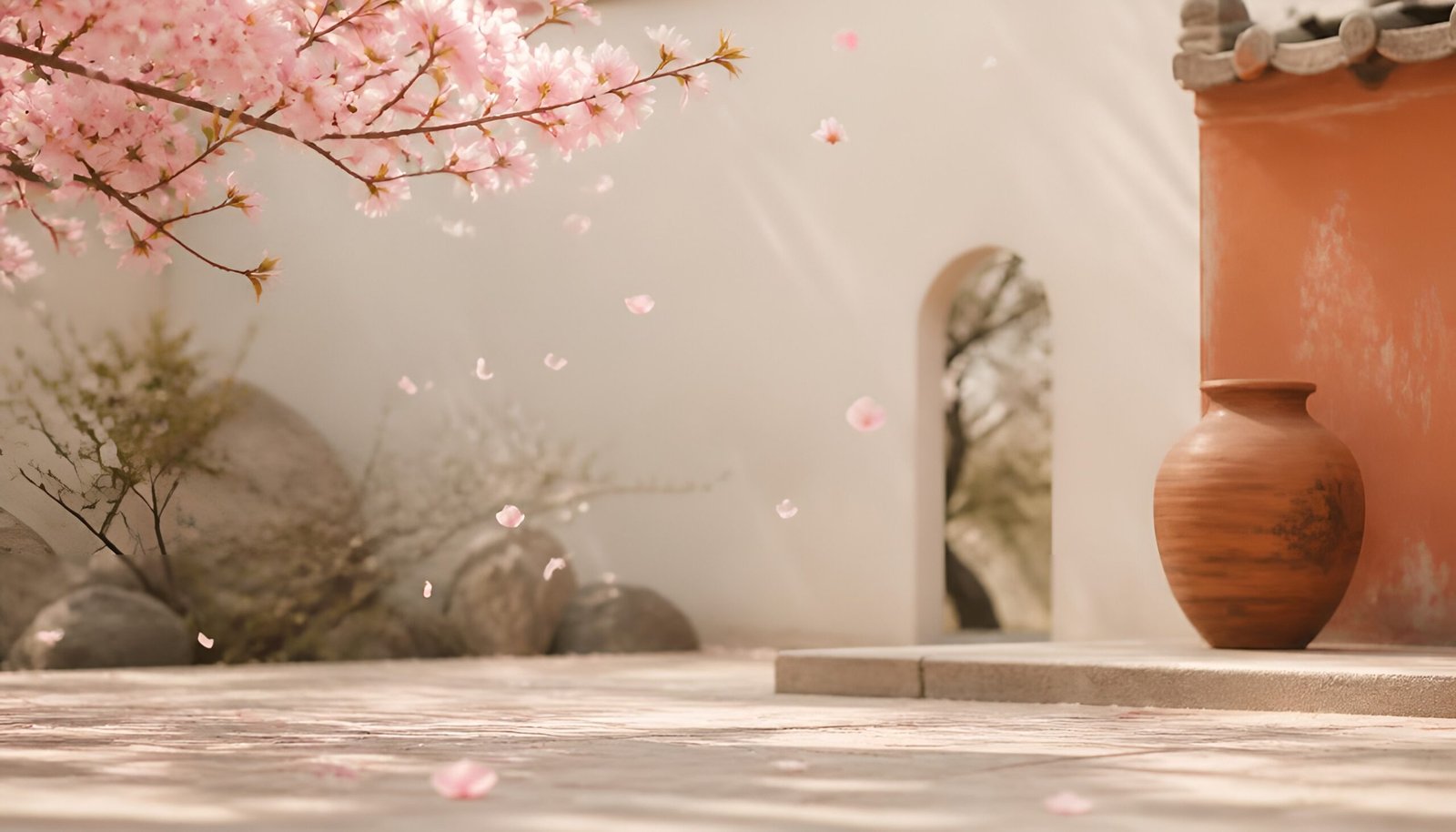
In Japanese Buddhist culture, the cherry blossom – sakura – became the central image for impermanence precisely because of how brief and complete its beauty is. The blossoms last barely two weeks. And because they last barely two weeks, they are attended to differently than something assumed to be permanent. People travel to see them. They sit beneath the trees. They pay attention in a way they would not if the blossoms stayed all year.
The Buddhist insight here is not sentimental. It is practical: impermanence is not the enemy of beauty or meaning. It is, in many cases, the condition that makes them possible. A meal matters more when you are hungry. A reunion matters more after absence. A period of stability in your life matters more – is experienced more fully – when you understand it will not last forever.
What you are moving through right now is a sakura moment. It will change. Everything does. That is not a reason to fear it. It is a reason to be in it, fully, while it is here.
How to Move Through Change – A Buddhist Approach
- Name the resistance, not just the change. The fear of change is often less about the change itself and more about the loss of something the change takes with it – a role, an identity, a certainty, a version of the future you had already planned around. Naming what is actually being lost is more useful than fighting the change in general.
- Look for evidence that change has moved you forward before. Almost every significant change that felt threatening in the past eventually became the ground for something that would not have been possible otherwise. This does not mean all change is good – it means the fear of change is not a reliable guide to what change will actually produce.
- Allow the uncertainty without requiring it to resolve immediately. The period of transition – between the old ground and the new – is where the anxiety is highest. The Buddhist practice is not to rush through it but to stay in it as steadily as possible, without requiring premature resolution. The uncertainty is temporary. Demanding that it end faster than it can adds suffering without shortening the transition.
- Let impermanence be a comfort, not just a truth. If this difficult change is also subject to anicca – and it is – then the difficulty of it is also temporary. The disorientation, the grief, the anxiety about what comes next – all of this will also change. It always does. The law cuts both ways. Let it.
- Be present to what this period actually contains. Transitions are not only losses. They carry within them the possibility of what comes next, which has not yet made itself visible. Staying present – rather than fleeing into the past or projecting into the future – is what allows you to meet whatever is actually here, and to notice what is already beginning to grow.
The ground beneath you is uncertain because it is always uncertain. It just usually pretends otherwise. What is happening now is the truth of things becoming briefly visible. And the Buddha’s teaching – across forty-five years – was simply this: you can meet that truth. It will not destroy you. It has never destroyed anyone who met it fully.
Everything changes. That includes this. 🙏
For a closer look at the same teaching from a different angle, our piece on this too shall pass explores anicca through the lens of difficult moments specifically.
Source: Anicca (impermanence) · Three Marks of Existence · Bahiya Sutta Udana 1.10 · Pali Canon
Tags: fear of change buddha, anicca impermanence teaching, buddha on new beginnings, why change feels scary buddhism, impermanence as liberation buddhist, how to deal with change buddhist teaching
🙏 More teachings from the Buddha
Subscribe to Peaceful Buddha for short daily teachings. Visit Peaceful Buddha on YouTube