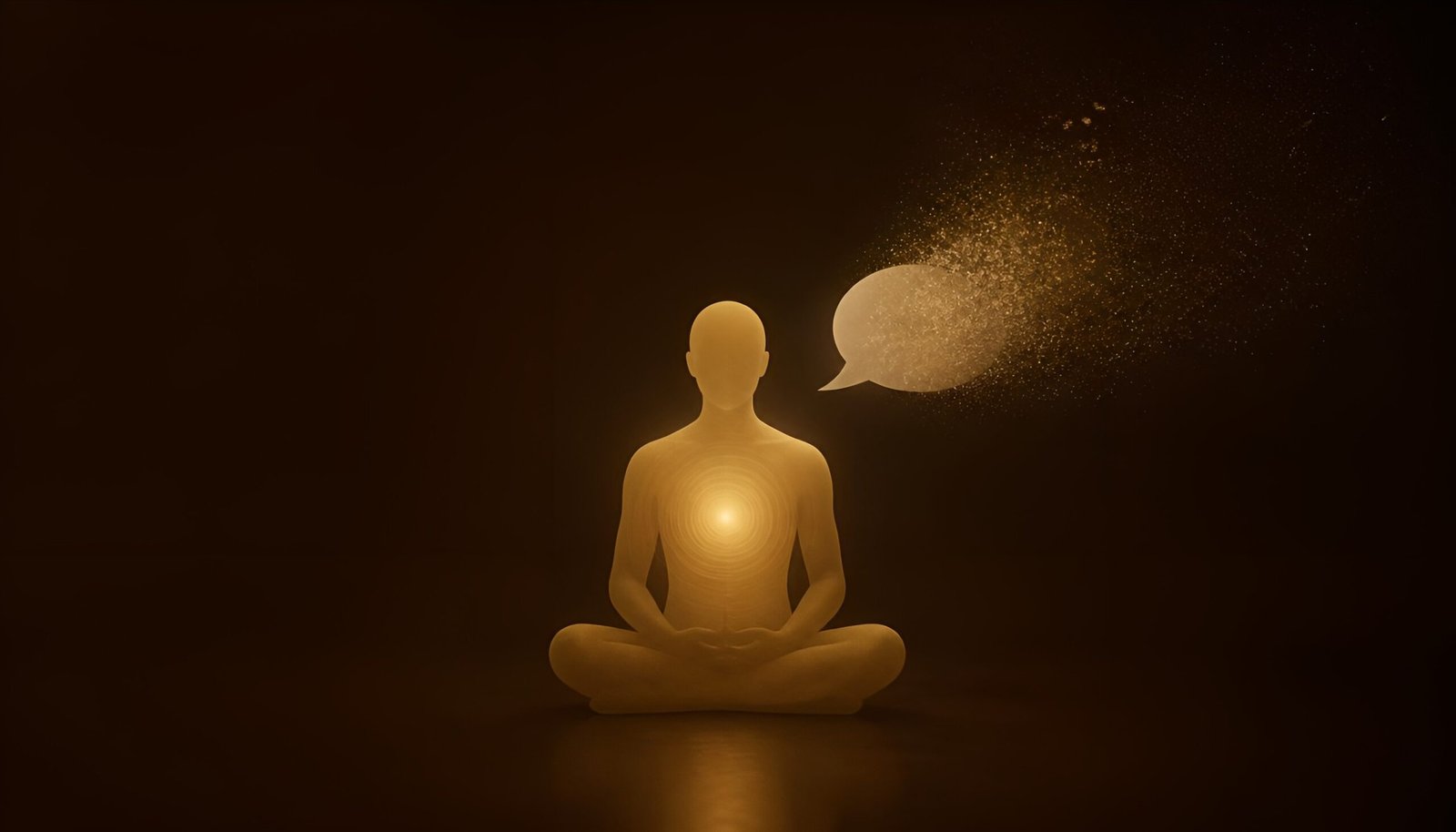
Noble silence is something we’ve almost entirely forgotten how to practice. We live in a world that never stops talking. Notifications, opinions, arguments, commentary, the noise is constant, and somewhere in it, we have forgotten something the Buddha considered essential.
The ability to be silent. Not because we have nothing to say. But because we understand that some wisdom cannot be spoken, it can only be felt in stillness.
“When you meet together, either talk about the Dhamma or maintain a noble silence.”
– Buddha, Ariyapariyesana Sutta (MN 26, Pali Canon)
What Is Noble Silence?
The Pali term is ariya-tunhibhava, noble silence. The Buddha was precise about this. He did not say silence is always better than words. He drew a clear line between two worthwhile uses of time together: speaking about the Dhamma, or being silent in a way that is itself a practice.
Noble silence is not awkward quiet. It is not the absence of something. It is a full, conscious, aware stillness, the kind that allows the mind to settle, and something deeper to surface.
Everything else, gossip, complaints, idle talk, debate for its own sake, the Buddha considered a drain. Not because words are bad, but because most of our words pull us away from the present moment rather than bringing us closer to it.
The Buddha’s Own Practice of Silence
Throughout his forty-five years of teaching, the Buddha regularly withdrew into solitude and silence. He would sometimes go for half a month without speaking, not as withdrawal from the world, but as a return to its deepest layer.
There is a famous moment in the Pali Canon where the wandering ascetic Vacchagotta asked the Buddha a series of metaphysical questions, about the universe, about the soul, about what happens after death. The Buddha did not answer. Not because he did not know, but because he understood that some questions, when answered with words, only create more confusion.
His silence was not emptiness. It was the most precise answer available.
Why Silence Feels Uncomfortable
Most of us find silence genuinely difficult. We fill it, with phones, with music, with conversation, with anything. The Buddhist explanation for this is straightforward: the mind is afraid of itself.
When the noise stops, what’s left is just the mind, with its unfinished thoughts, its unprocessed feelings, its questions without answers. We reach for distraction not because we are lazy, but because we are avoiding something we haven’t yet learned to sit with.
Noble silence is the practice of staying anyway. Of letting those thoughts rise, and watching them pass, without grabbing at them or pushing them away. This is where the real work happens, not in the speaking, but in the stillness.
How to Practice Noble Silence Today
You do not need a monastery. You need five minutes and a willingness to resist the first impulse to fill the quiet.
- Choose one moment of silence each day. Morning before you check your phone. Or the first five minutes of lunch. Just one deliberate pause where no input is allowed in.
- When silence feels uncomfortable, don’t escape it. Notice the discomfort. Name it. “I feel restless. I want to reach for something.” That noticing is already the practice.
- Before speaking, ask: is this Dhamma or is this noise? Not every thought needs to become a sentence. Not every opinion needs to be shared. The Buddha’s filter was simple, does this lead toward peace, or away from it?
- Let silence be a gift you give others. Sometimes the most compassionate thing you can offer someone is your full, quiet presence, without advice, without fixing, without filling the space they need to find their own answer.
In the silence between words, something waits. The Buddha spent a lifetime pointing toward it.
Speak about what matters. Or maintain a noble silence. 🙏
New here? Learn more about what this blog is about.
Source: Ariya-tunhibhava (noble silence), Ariyapariyesana Sutta (MN 26), Pali Canon
Tags: noble silence buddha, what buddha said about silence, ariya tunhibhava, buddhist teaching on silence, power of silence buddhism, mindfulness and silence
🙏 Enjoyed this teaching?
Watch the short video version and subscribe for daily Buddhist wisdom. Visit The Peaceful Buddha on YouTube