He who conquers himself – that’s how the Buddha defined real strength, not the way we usually measure it. We measure strength in obvious ways. The job won. The argument finished. The opponent outlasted. Victory, by most cultural standards, is something that happens to someone else – a defeat we cause in the world outside ourselves.
The Buddha measured it completely differently.
“Though one may conquer a thousand times a thousand men in battle, yet he indeed is the noblest victor who conquers himself.”
– Buddha, Dhammapada verse 103
Why Self-Conquest Outranks Every Other Victory
The image in this verse is deliberately extreme. A thousand times a thousand men – a million soldiers, defeated in battle. This was, in the Buddha’s time, the highest conceivable measure of worldly power. A conqueror of that scale would be remembered for generations, celebrated as the greatest hero a kingdom could produce.
And the Buddha says: there is something greater. Not louder. Not more visible. Not something that earns parades or monuments. The person who has mastered their own anger, their own fear, their own craving – that person has achieved something no army and no empire can take away from them.
External victories can be reversed. Armies are eventually defeated by other armies. Empires fall. But the inner victory the Buddha describes here is not dependent on circumstance. It cannot be conquered back.
What “Conquering Yourself” Actually Means
This is not about self-punishment or rigid control. The Buddhist concept of self-conquest is closer to mastery than domination – the difference between a skilled rider who works with a horse’s nature, and someone who simply tries to force it into submission.
To conquer yourself means to no longer be ruled by impulses you did not choose. The flash of anger that makes you say something you regret. The craving that drives you toward something that does not actually serve you. The fear that shrinks your life smaller than it needs to be.
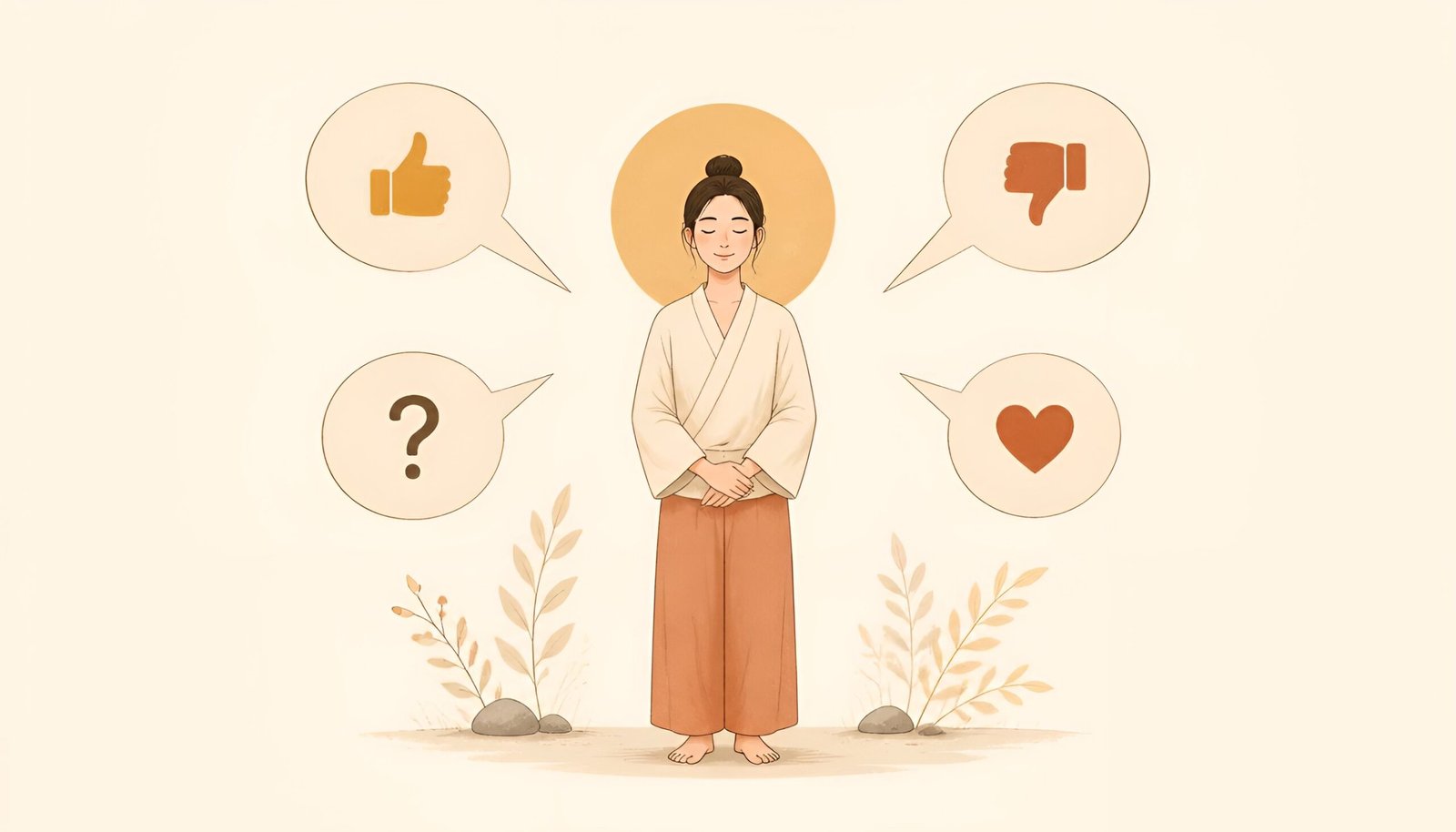
Self-mastery is the capacity to feel these forces arise and choose your response anyway – rather than being driven by them as if you had no say in the matter at all.
“Not even a god, an angel, Mara, or Brahma can turn into defeat the victory of a person who is self-subdued and ever restrained in conduct.”
– Buddha, Dhammapada verse 105
Why This Kind of Victory Is So Rare
Defeating others, in a strange way, requires less of us than defeating our own patterns. Anger gives us an external target – something to push against, someone to blame, an enemy that explains our suffering without requiring us to look inward.
Conquering yourself offers no external target. There is no one to blame when the discipline required is your own. There is no applause when you choose not to react, not to indulge, not to follow the easier impulse. This is precisely why the Buddha called it the noblest victory – because it is the one almost no one is watching, and almost no one is fighting for.
Most people will spend their entire lives fighting battles against people, circumstances, and outcomes outside themselves without ever turning that same effort toward the one battlefield that actually determines the quality of their life: their own mind. He who conquers himself has already won the only battle that matters.
How “He Who Conquers Himself” Applies to Daily Life
- Identify your most frequent opponent. Is it anger? Craving? Fear? Most people have one pattern that shows up more often than the rest. Naming it clearly is the first step toward working with it directly.
- Notice the moment before you react. Self-mastery does not happen in dramatic moments. It happens in the small gap between an impulse arising and a response being chosen. Practicing that pause, even imperfectly, is the actual training.
- Treat setbacks as part of the practice, not proof of failure. You will lose this inner battle many times before you win it consistently. The Buddha did not expect perfection. He expected persistence. Every return to awareness after losing ground is still progress.
- Measure your victories privately. This kind of conquest rarely earns recognition. Learn to notice your own progress without needing anyone else to see it. The satisfaction of self-mastery is meant to be its own reward.
- Remember what is actually at stake. An army defeated can be replaced. A mind that has learned to govern itself changes the entire trajectory of a life. This is the more valuable battlefield, even though it offers no medals.
There will always be battles you can fight outside yourself. He who conquers himself needs none of them. The one that actually matters is closer than any of them.
If this idea of quiet, unwatched discipline resonates, our guide on the Buddha’s teaching on heedfulness explores the same territory from a different angle.
Conquer yourself. It is the noblest victory there is. 🙏
Source: Dhammapada verse 103 · Dhammapada verse 105 · Pali Canon · Buddhist teaching on self-mastery
Tags: he who conquers himself buddha · dhammapada verse 103 · self mastery buddhism · true strength buddha teaching · self discipline buddhist · noblest victor buddha
🙏 Enjoyed this teaching?
Watch the short video version and subscribe for daily Buddhist wisdom. Visit Peaceful Buddha on YouTube